Yellowwood (Cladrastis kentukea)
Height: 30 to 50 feet
Spread: 35 to 50 feet
Bloom Time: May
Bloom Description: White
Sun: Full sun
Suggested Use: Flowering Tree and Shade Tree
Flower: Showy
Native to: Appalachia
The Yellowwood is like the kid that also stood by himself along the playground fence during recess. Greatly overlooked and underappreciated, yet when it grows it will be the all-star of the landscape that stands out and has the most success in life.
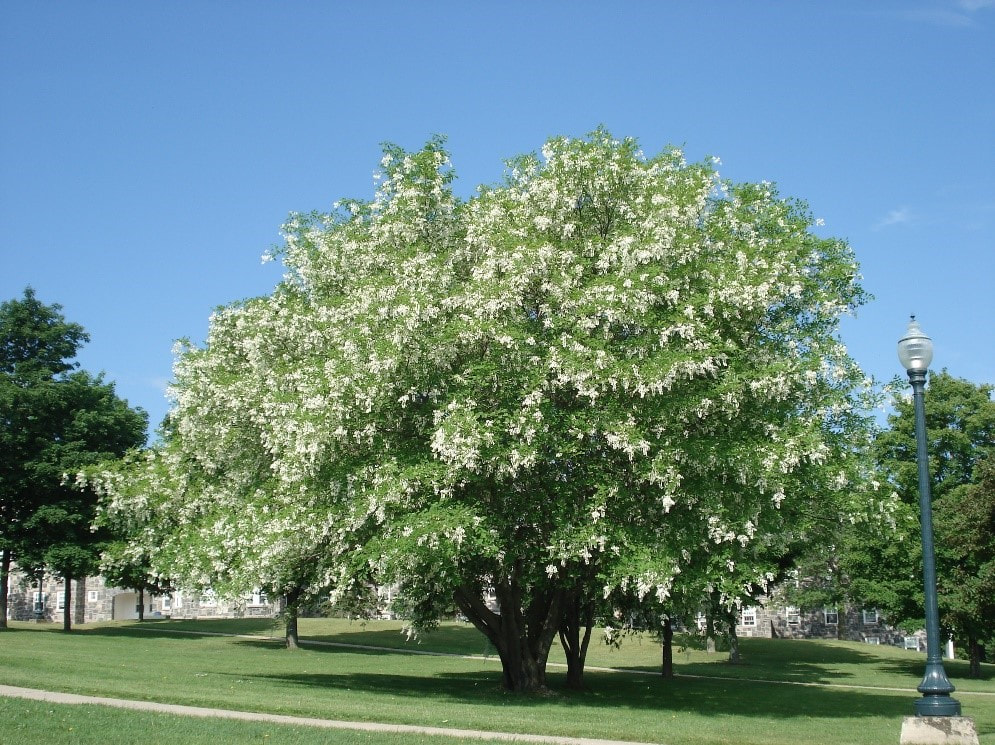
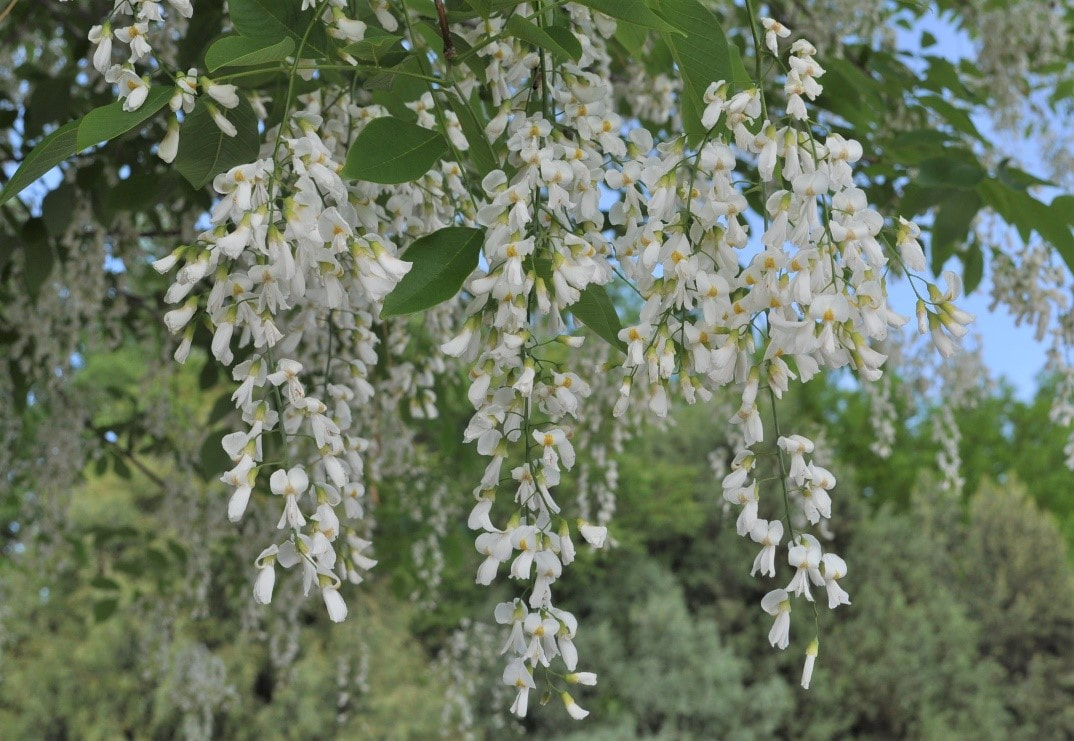
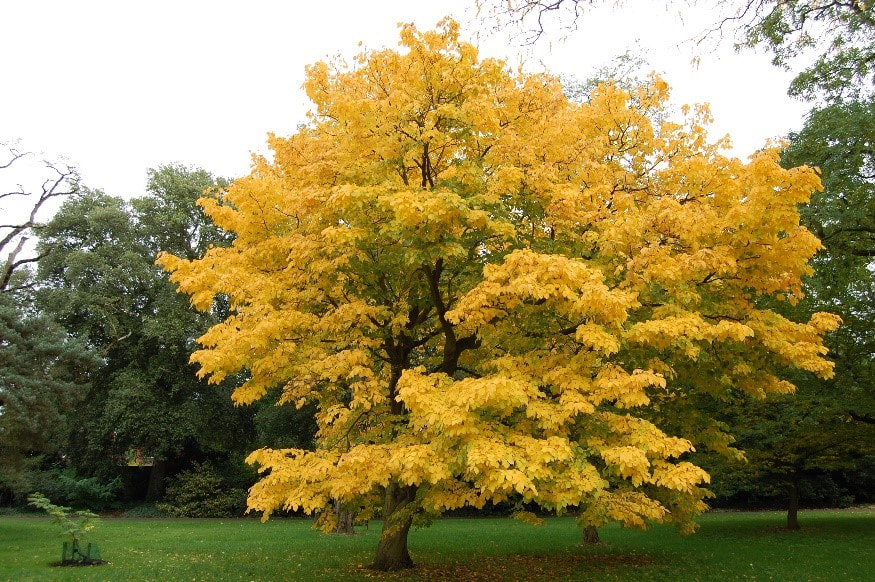
The Yellowwood is a show stopping tree that puts on a breathtaking display of white drooping flowers that dangle 14 inches below the branches in the spring and a brilliant yellow leaf color in the fall, this tree is one not to be overlooked. The yellowwood is rounded out by a smooth, gray, beech-like bark is handsome year-round. The common name comes from the heartwood that when cut is a vibrant yellow. The Yellowwood is an excellent tree for flowers and foliage, and the medium size and spread makes it a perfect tree for smaller backyards. A medium growth rate sees the tree grow about 12 feet tall in an 8-to-10-year period.
In 1796, the botanist and plant explorer André Michaux was traveling through a driving and icy rain trying to get to refuge in Fort Blount in the middle of the Kentucky wilderness when he came across a curious tree. The tree was so unique that Michaux went to the fort and returned in the middle of a snow squall to collect seeds, root cuttings and seedlings of the tree. When the solider cut the one mature tree down to get to the seed pods still affixed to the top branches, the yellow heart wood of the shined through the blinding snow, and Michaux named the tree for this feature. John Bartram fell in love with Yellowwood and planted a specimen next to his house (this tree still stands today). In 1822, botanist Constantine S. Rafinesque sent seeds of the Yellowwood to Thomas Jefferson. Writing from Monticello that same year, Jefferson thanked Rafinesque for the seeds, stating “too old to plant trees for my own gratification, I shall do it for my posterity…”
The Yellowwood is not a documented host plant for any butterfly or moth species, but is a great source of food. Considered a good nectar and pollen source, Yellowwood flowers attract a lot of pollinators. Wherever the trees are plentiful, the plants provide a surplus of a light amber honey with a strong distinctive flavor.■